Jira vs Asana (2026): Which Is Better for Your Team? A Complete Comparison

Few tool debates generate more heat in technology and business circles than Jira vs Asana. Both are dominant project management platforms. Both have millions of users. And yet they serve fundamentally different audiences in fundamentally different ways. Choosing the wrong one can cost your team months of frustration; choosing the right one can dramatically accelerate how work gets done.

This is a deep, honest comparison — not a surface-level feature checklist. We’ll cover how each tool actually performs in the real world, who benefits most from each, the true cost of ownership, and the questions you should ask before committing.

Executive summary: Jira is the best project management tool for software development teams running Scrum or Kanban, with unmatched sprint management, bug tracking, and engineering workflow depth. Asana is the best tool for cross-functional teams — including those with engineering departments — that need the whole organization, not just developers, using the same platform.

Jira vs Asana: Side-by-Side Comparison

FeatureJiraAsanaWinner
Best ForSoftware dev, engineeringCross-functional teamsDepends on team
Ease of UseComplex, developer-friendlyIntuitive, broadly accessibleAsana
Agile/Scrum SupportBest-in-class (native sprints)Good (Starter plan+)Jira
Bug TrackingExcellent (native issue types)Workaround requiredJira
Sprint ManagementNative, with velocity chartsAvailable, less granularJira
Gantt / TimelineYes (Advanced)Yes (Starter)Asana (available earlier)
Portfolio MgmtAdvanced planAdvanced planAsana (more visual)
Goal / OKR TrackingLimitedExcellent native goalsAsana
Non-Dev AdoptionVery difficultExcellentAsana
Git IntegrationDeep (GitHub, GitLab, Bitbucket)Available but shallowerJira
AI FeaturesAtlassian Intelligence (paid)Included in paid plansAsana
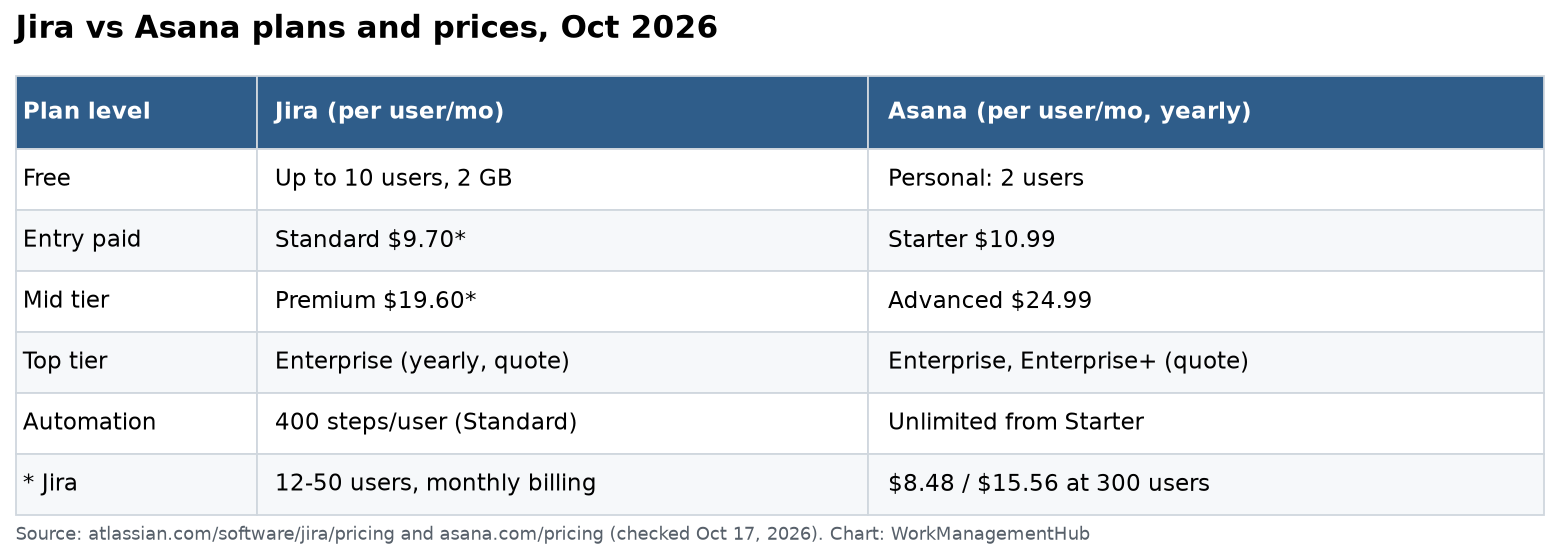
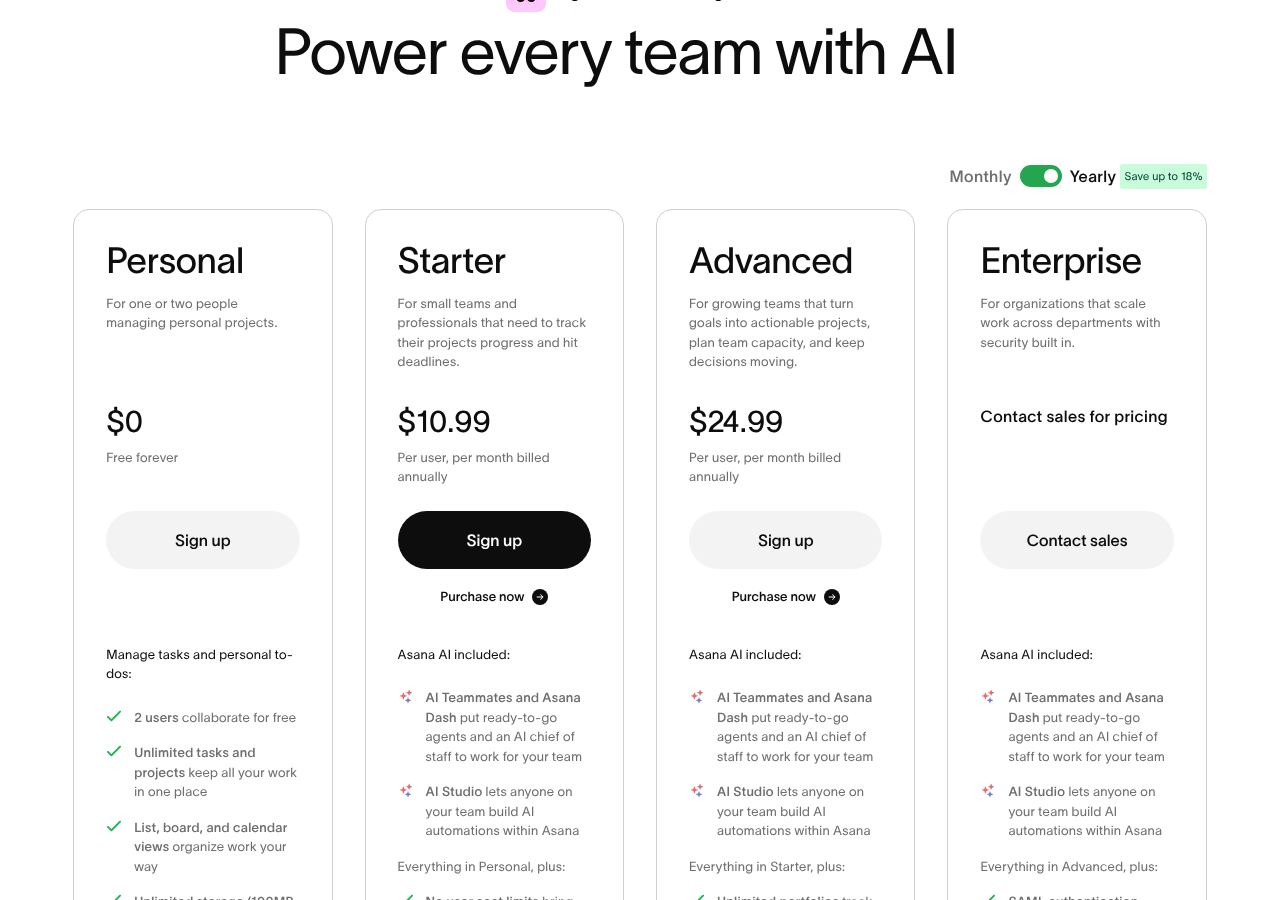
Free Plan10 users15 usersAsana
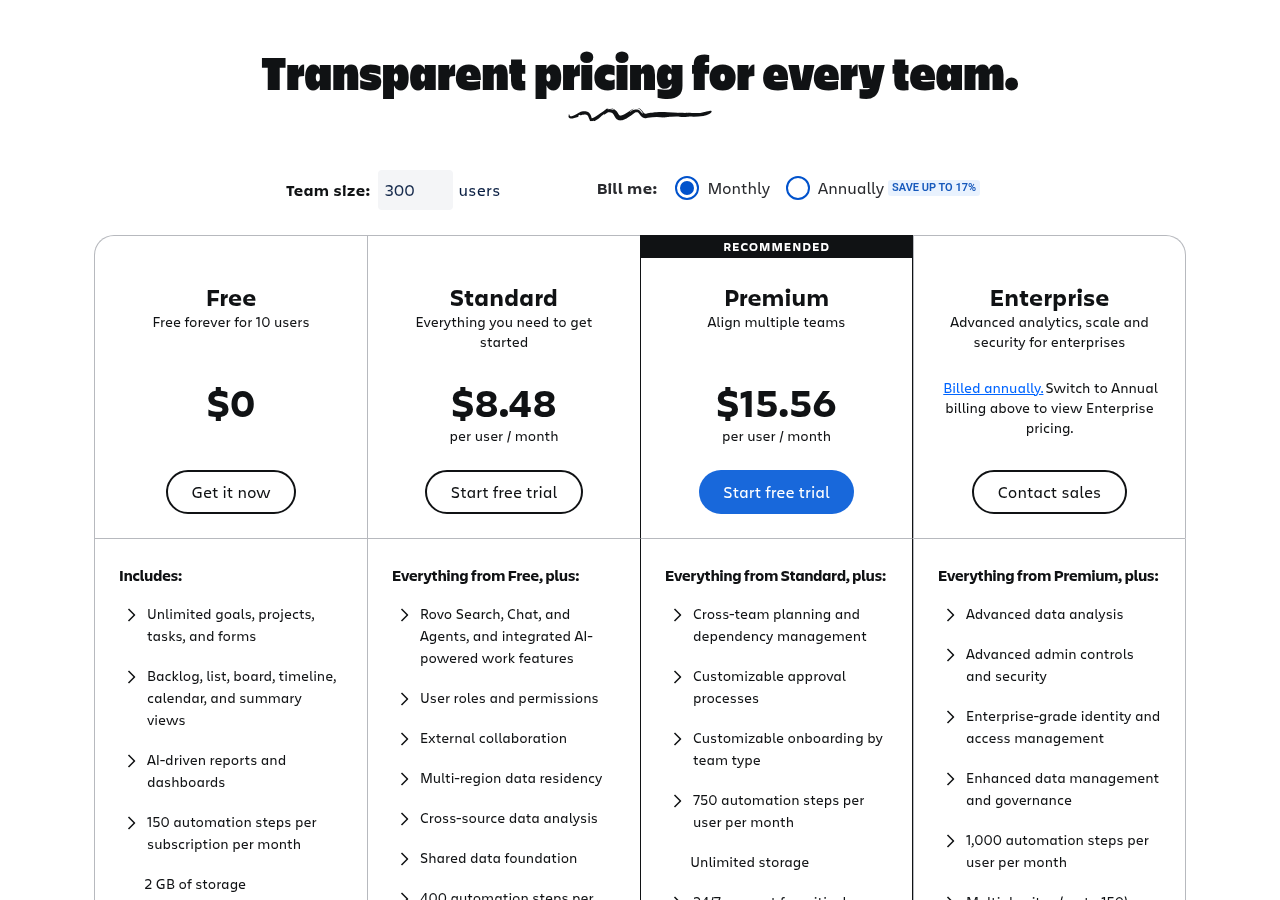
Starting Price$8.15/user/mo$10.99/user/moJira

Understanding Jira: Built by Developers, for Developers

Jira was launched by Atlassian in 2002 — originally as a bug and issue tracking tool for software teams. Over two decades, it has evolved into the most sophisticated agile project management platform in existence. Today, Jira is used by over 65,000 companies including NASA, Twitter, Spotify, Square, and Airbnb. For engineering organizations, Jira is often less of a “tool choice” and more of an industry standard.

Jira’s Core Strengths for Engineering Teams

Native Scrum and Kanban Boards: Jira’s agile boards are purpose-built for software development methodology. Scrum boards show active sprint items with story point totals, velocity tracking, and sprint goals. Kanban boards support WIP (work in progress) limits — a critical control mechanism that prevents teams from pulling more work than they can complete. No other tool provides this combination with the same depth and maturity.

Sprint Management and Velocity Tracking: In Jira, sprints are a first-class concept — not a workaround or a view overlay. You plan a sprint from the backlog, assign story points, launch the sprint with a goal, and at the end Jira automatically generates a Sprint Report showing what was completed vs. committed. Over multiple sprints, the Velocity Chart shows your team’s average throughput — essential data for accurate sprint planning and executive forecasting.

Issue Types and Custom Workflows: Jira’s issue type hierarchy (Epic → Story → Task → Sub-task, plus Bug, Improvement, New Feature) maps directly to how software teams organize work. Each issue type can have its own custom workflow with custom statuses: for a bug, the workflow might be Open → Reproduced → In Fix → In QA → Verified → Closed. For a feature story: Backlog → Refinement → In Progress → In Review → Testing → Done. These custom workflows are a critical part of how mature engineering organizations maintain process discipline.

Deep Code Integration: Jira’s integrations with GitHub, GitLab, Bitbucket, Jenkins, CircleCI, and other development tools are more deeply bidirectional than any competitor. Link a GitHub commit to a Jira issue and the issue automatically transitions in status. See which branch, commit, or pull request is associated with any Jira ticket — without leaving the issue. In Jira Software’s development panel, you can see the full code history of a ticket: commits, branches, pull requests, build status, and deployment status.

Reporting That Engineering Teams Actually Need: Jira’s built-in reports for agile teams go beyond what any other PM tool offers: Sprint Burndown Chart, Sprint Velocity Chart, Cumulative Flow Diagram, Control Chart (cycle time distribution), Release Burndown, Epic Report, and Version Report. These charts are automatically generated from your team’s work data — no manual data entry, no spreadsheet exports. For engineering managers and CTOs who need to track team health and release predictability, these reports are invaluable.

Jira’s Real Weaknesses

Notoriously poor experience for non-technical users: This is not an exaggeration — it’s the most consistent feedback in every Jira user study. Marketing managers, HR professionals, and finance teams who are assigned Jira access to review tickets or track deliverables often find the interface confusing, the terminology foreign, and the workflow unintuitive. Jira was built by developers for developers, and it shows in every UI decision.

Complex administration: Setting up Jira properly requires significant administrative investment. Project schemes, issue type schemes, workflow schemes, permission schemes, notification schemes — the configuration depth that makes Jira powerful for enterprise engineering also makes initial setup time-consuming and error-prone without experienced Jira administrators.

Cost escalation at scale: Jira Cloud Standard at $8.15/user/month is competitive, but Premium at $16/user/month adds up quickly for large teams. The Atlassian ecosystem lock-in — once you’re in Jira + Confluence + Bitbucket + OpsGenie — means your total Atlassian spend can become substantial and difficult to exit.

Understanding Asana: Built for How Work Actually Gets Done Across an Organization

Asana was founded in 2008 by Dustin Moskovitz and Justin Rosenstein, both former Facebook employees who saw firsthand how coordination problems between teams slow organizations down. Their founding insight was that work coordination — not just task tracking — was the core problem to solve. That philosophy shapes every product decision Asana has made since.

Asana is now used by over 150,000 paying organizations including Amazon, Deloitte, Spotify, Uber, and NASA. Unlike Jira, whose users skew heavily toward engineering, Asana’s users span every department: marketing, operations, HR, finance, legal, and product management. This broad adoption is by design.

Asana’s Core Strengths

Universal Accessibility: Asana’s most underrated competitive advantage is that anyone can use it productively within hours. The interface is clean, the concepts are intuitive (projects contain tasks, tasks have assignees and due dates), and the learning curve is gentle. When companies choose Asana to align engineering with marketing, sales, and ops — everyone can participate without a training program.

Goals and OKR Framework: Asana has the best native goal-tracking system in any project management tool. Goals are hierarchical: company goals contain team goals which contain individual goals. Each goal connects to real projects and tasks as “contributing work” — so as tasks are completed, goal progress updates automatically. For companies running quarterly OKRs, this is a game-changer: strategy and execution finally live in the same system.

Portfolio and Workload Management: Asana’s Portfolio view (Advanced plan) provides a real-time overview of every project: status, timeline, priority, owner, and health. Program managers and executives can see across 20+ simultaneous projects without asking for status updates. The Workload view shows each team member’s task load across all projects, flagging over-allocation before it causes missed deadlines or burnout.

Timeline View with Automatic Rescheduling: Asana’s Timeline (Gantt-style view) not only shows task dependencies but automatically suggests rescheduling when you make changes. Shift one task’s date and Asana surfaces dependent tasks that need to move. For non-developer project managers who need Gantt-style planning without Jira’s complexity, this feature is exactly right.

Asana Intelligence (AI — Included in All Paid Plans): While Jira charges separately for Atlassian Intelligence, Asana bundles AI into every paid plan. Asana AI can generate task descriptions from brief prompts, suggest team member assignments based on current workload, write status update summaries for stakeholders, and identify at-risk tasks based on timeline and dependency data. Having AI built into the core subscription rather than as an add-on is a meaningful value advantage.

Asana’s Real Weaknesses

Sprint management is not native: Asana can simulate sprint management — you can create a “Sprint” section in a project, use custom fields for story points, and generate sprint-style reports. But it requires setup and workarounds. For engineering teams running strict Scrum with burndown charts, velocity tracking, and sprint retrospectives, this is a meaningful gap compared to Jira’s native sprint architecture.

No built-in time tracking: Asana has no native time tracking feature. Teams that need to track billable hours per task must integrate with Harvest, Toggl, Clockify, or another time tracking tool. This adds friction and another tool subscription for agencies, consultancies, and teams that bill by the hour.

Advanced features locked behind expensive tiers: The Advanced plan at $24.99/user/month — where Asana’s portfolio management, workload, and advanced reporting features live — is expensive compared to ClickUp Business at $12/user/month. For the full Asana experience, budget accordingly.

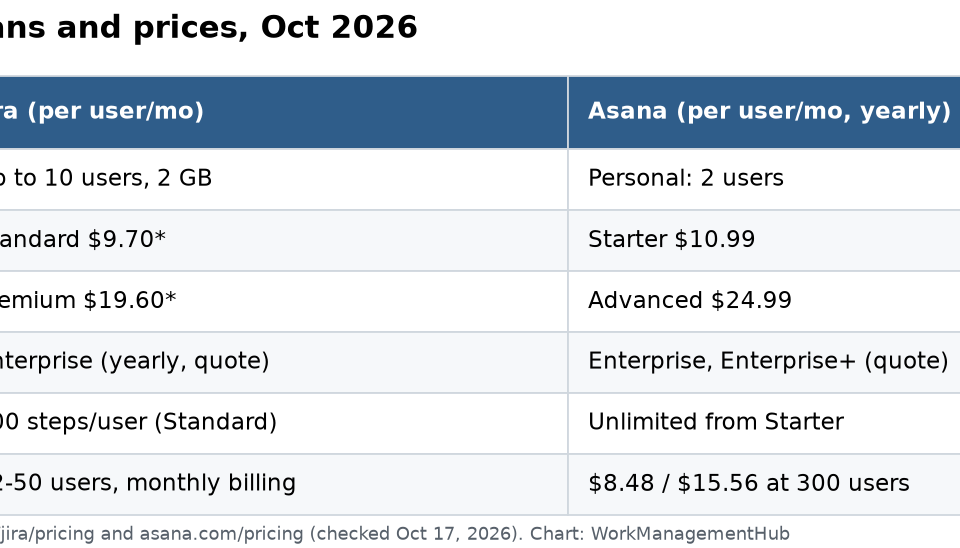
Pricing Breakdown: Jira vs Asana

Jira Pricing (2025, Cloud)

  • Free: Up to 10 users. Scrum and Kanban boards, backlog, roadmap (basic), 2GB storage. Best free developer tool available.
  • Standard — $8.15/user/month: User roles (admin/member/viewer), audit logs, data residency options, 250GB storage. The right tier for most engineering teams.
  • Premium — $16/user/month: Advanced roadmaps (cross-project dependencies and portfolio planning), unlimited storage, Atlassian Intelligence (AI), IP allowlisting, 99.9% SLA. Required for serious portfolio-level engineering management.
  • Enterprise — Custom: Unlimited sites, centralized admin, SAML SSO, compliance features, dedicated support.

Asana Pricing (2025)

  • Free: Up to 15 users. Unlimited tasks, projects, and messages. List, Board views. Basic integrations. No Timeline, Gantt, reporting, or automation.
  • Starter — $10.99/user/month: Timeline view, Gantt chart, workflow automation (rules), dashboards, 100+ integrations, Asana AI. The minimum tier for real team project management.
  • Advanced — $24.99/user/month: Portfolio management, workload view, Goals and OKRs, advanced reporting, resource management. Where Asana fully shines for program management.
  • Enterprise — Custom: SAML SSO, advanced data governance, custom branding, priority support.

Which Teams Should Choose Jira vs Asana?

Choose Jira if your team is:

  • A dedicated software engineering team running Scrum or Kanban with strict methodology adherence
  • A product organization deeply integrated with the Atlassian ecosystem (Confluence, Bitbucket, OpsGenie)
  • A DevOps or platform team that needs deep CI/CD pipeline integration and release tracking
  • An organization where project management is exclusively an engineering concern and business teams use separate tools
  • A team where every user is comfortable with technical interfaces and developer-oriented workflows

Choose Asana if your team is:

  • A cross-functional organization where engineering, marketing, HR, and operations need to coordinate in one tool
  • A product company where PMs need to communicate roadmaps and OKRs across technical and non-technical stakeholders
  • An organization deploying project management broadly across the whole company, not just to developers
  • A team that wants AI features included in the base subscription rather than paying extra
  • A startup or scale-up that wants fast adoption across all departments without dedicated tool admins

Real-World Scenario: How Would Each Tool Handle This Project?

Scenario: A SaaS company is launching a new feature. Engineering needs to track tickets; marketing needs to plan the launch campaign; customer success needs to prepare documentation.

With Jira: Engineering creates Epics, Stories, and Bugs in Jira. Marketing and CS either get Jira access (which they find confusing) or the company pays for separate tools for their work. Integration between Jira and the marketing tool requires Zapier or manual coordination. Three separate data sources, sync issues, and status update requests via Slack.

With Asana: Engineering creates a Sprint project in Asana with custom story point fields. Marketing creates a Campaign Launch project with timeline and dependencies. CS creates a Documentation project. All three projects link to a shared “Feature Launch” Portfolio. The PM has a single dashboard showing status across all three workstreams. AI generates the weekly stakeholder update from live task data. Everyone — technical and non-technical — works in one place.

This scenario illustrates why many growing companies ultimately land on Asana for company-wide coordination, even if their engineering team supplements with Jira for deep sprint work — and integrate the two via Asana’s native Jira integration.

Frequently Asked Questions

Can Asana and Jira be used together?

Yes — and many companies do exactly this. Asana offers a native Jira integration (available on the Starter plan and above) that creates a two-way sync between Asana tasks and Jira issues. Engineering tickets created in Jira appear in Asana, and status updates sync bidirectionally. This lets engineering use Jira’s deep developer tools while business teams track everything in Asana.

Is Jira good for non-technical teams?

Technically yes, practically often no. Jira can be configured for non-technical workflows, and Atlassian offers Jira Work Management specifically for business teams. However, the terminology (epics, stories, sprints), the complex configuration, and the developer-centric defaults consistently make Jira challenging for marketing, HR, finance, and operations teams. These teams typically experience significantly better outcomes with Asana or Monday.com.

Does Asana support Scrum?

Yes, with caveats. Asana can support agile/Scrum workflows using sections as sprint containers, custom fields for story points, and task rules for workflow automation. However, Asana doesn’t have native sprint creation, velocity charts, or burndown reports the way Jira does. Engineering teams with strict Scrum methodology will need to accept some manual workarounds in Asana or use a tool like Linear or Jira for pure sprint management.

Final Verdict: Jira vs Asana 2025

These are not competing tools fighting for the same customer — they serve fundamentally different organizational needs, and understanding that distinction is the key to making the right choice.

Jira wins for pure software engineering teams that need the best agile workflow management, the deepest code repository integration, and the most comprehensive sprint analytics available. If your team speaks in Epics, velocity, and deployment pipelines — Jira is your tool.

Asana wins for organizations that need project management to span every team, connect strategy to execution through goal tracking, and give executives real-time visibility across the entire company portfolio. If you need marketing, engineering, HR, and operations all on the same page — Asana delivers that coordination better than any alternative.

Leave a Comment

Your email address will not be published. Required fields are marked *